

 Tavis Bohlinger
We’ve asked over fifty scholars and theologians what they think makes a good biblical scholar or theologian. Here’s what they had to say.
Andrew Abernethy
Sean Adams
Garrick Allen
John M. G. Barclay
Matthew Bates
Ben Blackwell
Helen Bond
Max Botner
Rick Brannan
Todd Brewer
Andrew Byers
Daniel J. Cameron
Ryan Collman
Christopher Croom
David DeSilva
Joey Dodson
John A. Dunne
Seth Ehorn
Grace Emmett
Craig Evans
Jill Firth
Allan Garrow
Timothy Gombis
Andrew Abernethy
What makes a good scholar? One’s tendency in answering this question is to describe a scholar in her/his own image, with her/his own particular interests.
In my opinion, what makes a good scholar is an acute awareness of oneself. What are the ways God has particularly gifted me? What areas are of most interest to me? What is my area of specialization? What audience am I most gifted and called to address? How has my culture and context impacted all of the answers to my previous questions? Answering these questions frees a scholar from several challenges. It frees us to enjoy our specialization without anxiety about not knowing everything there is to know within one’s field. Naturally, a scholar must be a specialist in a particular area, so remaining mindful that a scholar should have a specialization keeps a good scholar sharp and engaging deeply within a cross-section of their discipline.
Answering these questions also sets us free from the endless danger of comparison. Some can write for a general audience, while others can write for a very narrow academic audience. Some areas of specialization lend themselves to publication in peer reviewed journals, while other areas of specialization tend towards publication in books that target the church and ministers. Some are incredibly gifted technicians, while others have a remarkable capacity to synthesize and conceptualize. Some are experts in backgrounds, others in criticism, yet others in reception.
It is a long process—one that I’m currently in the midst of—of figuring out who you are as a scholar, but being alert to your gifting, training, calling, and area of specialty can free you up to be a good scholar.
As a corollary, a good scholar should also have an acute awareness of their need to depend upon the work of other scholars to enhance one’s own research. Good scholars will not pretend that they know everything, but they will instead draw from the work of colleagues who have done remarkable research in their own areas. If you are into literary studies, why not benefit from those in backgrounds? If you are a text critic, why not benefit from specialists in reception history? Good scholars can find enrichment by reading broadly and attempting to be interdisciplinary, while recognizing that one cannot possibly be a specialist in every area. We need one another.
So, a good scholar will know oneself and will also benefit from others.
Sean Adams
Although the image of the lone scholar is prominent, it is not really accurate. All of us need other scholars to sharpen our ideas and to gain new viewpoints on the texts. As a result, it is important for scholars to be humble regarding their ideas and to be able to work with others.
Not only do both of these traits make you a more agreeable person to work with (an important factor in getting a job and retaining good colleagues), but they also help one to recognize that they do not need to have all the answers, and that their work, as well as all of scholarship, is a process; one that will continue long after we are gone.
Garrick Allen
Persistence. Dealing with failure and rejection are inherent parts of the academic game, be it in journal submissions, book proposals, conference papers, job applications, grant applications, fellowships, awards, or promotions.
Despite the inherent difficulties involved in being constantly rejected, I’ve found that these experiences almost always make my scholarship better, even if it’s just to solidify my own approach.
John M. G. Barclay
I would say something different for biblical scholar and theologian (the two are not always the same), but for biblical scholar:
Attention to detail combined with breadth of interest.
Matthew Bates
I think some of our best biblical scholars—Hays, Barclay, Wright, and others—act like crime-scene investigators. The truth is paramount! So they pore over Scripture and previous investigation reports again and again. They read broadly to crack open new horizons. Eventually, a set of questions and observable patterns are discovered that have eluded previous investigators. It is easy to be creative without being faithful to the Scripture, or faithful without being creative. The best manage both.
Ben Blackwell

We are part of a common guild, so to be a good scholar in this sense is to be committed to the content of the guild but also the community of the guild.
Regarding the content, every scholar brings their individual strengths to the mix so it would be hard to pin down a distinct feature. For example, some do well with analysis, others do well with synthesis, and both approaches provide a service to the academic community. Methods come and go, but the skill and discipline of giving close readings of texts will always be valued in biblical and theological studies.
Regarding the community, now that I’m entering my mid-career phase, I also appreciate much more the committed, mutual support of other scholars, whether this is formal or informal feedback, contributing to projects, or just the advice for various aspects of life.
Helen Bond
Curiosity.
Max Botner

From my perspective, a good biblical scholar is someone who is immersed in the primary sources, has a firm grasp of the history of the discipline, and communicates clearly with and listens to the voices of others.
A healthy dose of self-awareness about one’s own ideological commitments is also in order—after all, the vast majority of watershed moments in biblical studies are marked by someone who had a theological (or, if one prefers, an ideological) axe to grind.
Rick Brannon

A good biblical scholar realizes that others are smarter than he is.
At least, this is true for me. Because of this, I find it incredibly valuable to have two or three people—colleagues, friends, teachers, mentors, whatever—to run crazy ideas past. Run drafts of articles past them. Run book proposals past them. Run SBL paper proposals past them. Require them to be brutally honest. And promise them you won’t get (too) upset. And let them—encourage them—to do the same with you. Your work will be sharper. Your writing will be sharper. And you will be sharper.
Finally, master the data.
Todd Brewer
A good biblical scholar is one who approaches the text with a genuine openness to being corrected by it.
Andrew Byers
A willingness to cross borders and boundaries.
Theology and biblical studies are fields of study formally practiced within institutional frameworks and disciplinary boundaries that tend to hedge off their wider collective impact from faith communities and the wider culture.
I propose that a “good” theologian/Bible scholar persistently resists those confines. “Theology” is a term that is met with reservation and even suspicion by many laypersons in faith communities that cherish these fields of study, but view them as commandeered by professional academics. Theology and biblical scholarship are often understood as stuffy, heady disciplines worked out behind the closed office doors of university faculty members. A widespread impression is that the proper domains of theology and biblical studies are university libraries, theological college classrooms, or esoteric conferences attended only by impressively educated specialists.
In the Christian theological tradition, the incarnation of God in Christ is a central and evocative conviction. That mysterious event, however, suggests that theology cannot be confined to the safe domains of libraries, classrooms, or conferences because God himself has become flesh and wants to create a beautiful ruckus on the city avenues, in the country lanes, and in the pubs and gyms where everyday folks work, play, and live.
So “good” theologians and biblical scholars are willing to ply their craft in less academically conditioned contexts. They are embedded in other realms besides the library or those carefully manicured campus quads. If their subject matter is ever resisting the borders of the page, the classroom, and even heaven itself, then those of us who have taken on the mantle of rigorous study must be willing to puncture the walls, to voice an intelligible word in the marketplace.
Daniel J. Cameron

A good Biblical theologian is a faithful theologian. Whether or not you recognize it, everyone is a theologian of sorts. We all have thoughts about God whether a Christian, an atheist, a Buddhist, or a Muslim. Everyone speaks words about God. Our concern then with being good biblical theologians lies within the idea of faithfulness.
In what follows, I will give six characteristics of a faithful theologian in order to extrapolate this idea. I hope that these six characteristics encourage and challenge you as you continue on your journey to truly KNOW God.
1. The faithful theologian understands faithful reason.
First Corinthians 2:14–16 tells us that “The natural person does not accept the things of the Spirit of God, for they are folly to him, and he is not able to understand them because they are spiritually discerned. The spiritual person judges all things but is himself to be judged by no one. For who has understood the mind of the Lord so as to instruct him?
But we have the mind of Christ.” The mysteries of God are not able to be understood by the unregenerate for these things are “spiritually discerned.” Thus, faithful theology is done with a regenerate mind.
But, this passage points out that we have been given the mind of Christ, thus we ARE able to understand and speak of the things of God with our regenerate minds. Augustine argued that “our hearts need to be cleansed first by believing, that we may be able to see with them” (Expositions of the Psalms 33–50, 44:25). It is our faith that seeks understanding, not our understanding that gives us faith.
2. The faithful theologian’s life is affected by his/her theology.
Theologians have often been characterized as pious academics who sit in their ivory towers and write philosophical musings about God that no one outside of said tower can understand. Sadly, I have seen this to be true of many of my theology students. However, this should not and MUST not be the case if we are to be faithful theologians.
Martin Luther says, “It is through living, indeed dying and being damned that one becomes a theologian, not through understanding, reading, or speculation” (Operationes in Psalmos). We should not be able to speak about God and study who God is and not be completely changed. Kelly Kapic argues that “attempting to separate life and theology is to lose the beauty and truthfulness of both” (A Little Book for New Theologians, 42). Our theology MUST affect the way that we live and interact with others. J. I. Packer argues that “if our theology does not quicken the conscience and soften the heart, it actually hardens both; if it does not encourage the commitment of faith, it reinforces the detachment of unbelief; if it fails to promote humility it inevitably feeds pride” (A Quest for Godliness, 15). Faithful theology is LIVED theology.
3. The faithful theologian is committed to prayer and study.
Karl Barth says that theology “does not merely begin with prayer and is not merely accompanied by it; in its totality, it is peculiar and characteristic of theology that it can be performed only in the act of prayer” (Evangelical Theology, 160). How can we be doing faithful theology without submitting ourselves to God’s revelation and asking God to continually reveal himself to us as we continue our theological study?
The faithful theologian will be continually submitting themselves to God in prayer asking for his guidance and illumination as they seek to know God as he reveals himself. Kapic argues, “theological reflection can and should be a rigorous, authentic, and humble dialogue with God … Our study informs our prayers and our prayers enliven our study. We cannot choose between prayer and study; faithful theology requires prayerful study” (A Little Book for New Theologians, 82).
4. The faithful theologian approaches theology in humility and repentance.
This one should be a no-brainer; however, from my experience, it is extremely easy to allow our knowledge to “puff us up” (1 Cor 8:1). But if we are to be faithful theologians, we must be characterized by humility. Psalm 25:9 says that “He leads the humble in what is right and teaches the humble his way.” We must approach our theological study in humility so that God can lead us and teach us his ways as Psalm 25 says. When we allow the object of our study to determine our method of study, the result should be humility.
For instance, a geologist, in an attempt to learn what period of history a rock is from, does experiments to the rock in order to draw information from the rock. In theology, we do not draw information from our object of study, namely God, rather, we SUBMIT ourselves to God as he reveals information about himself to us. The nature of theology and theological study demands that we approach the subject in humility. We can be sure to have an attitude of humility by continually asking God to reveal to us where we have failed and repent of those failures. We must acknowledge that even though we are redeemed, we are continually being conformed into his image. The faithful theologian is characterized by humility and repentance.
5. The faithful theologian loves Scripture.
Psalm 1 says that blessed is the man whose “delight is in the law of the LORD and on his law he meditates day and night.” The word used for man in these verses is referencing a godly person. If one expects to be godly, to be conformed to the image of Christ, they will love Scripture. If faithful theology is only done by one who has been regenerated, then a love of Scripture has to be characteristic of them.
How can we expect to do faithful Christian theology without a love of the word of God which reveals to us the Word of God? Let us be more like the Psalmist in Psalm 119:162, “I rejoice at your word, like one who finds great spoil.” The faithful theologian loves Scripture.
6. The faithful theologian is filled with wonder.
The final characteristic of a faithful theologian is that they are filled with wonder. Karl Barth says, “If anyone should not find himself astonished and filled with wonder when he becomes involved in one way or another with theology, he would be well advised to consider once more, from a certain remoteness and without prejudice, what is involved in this undertaking” (Evangelical Theology, 63). How can we do faithful theology and not marvel at the majesty of God and his creation?
A perfect example of this type of wonder can be found in Christianity Today’s publication called The Behemoth, which is a digital magazine designed to “help people behold the glory of God all around them, in the worlds of science, history, theology, medicine, sociology, Bible, and personal narrative.” If you struggle with wonder and awe in your study of God, then I suggest you read this magazine. It is filled with wonderful articles of faithful theologians wondering and marveling at the majesty and beauty of God. The faithful theologian cannot help but be filled with wonder and awe at our beautiful God.
Ryan Collman

A good biblical scholar is a sane biblical scholar. What I mean by that is a good biblical scholar takes time for themselves and does not focus on their research every waking moment of the day; you have to have balance. If you don’t do this, you’ll (figuratively) go insane.
For many of us who aspire to be biblical scholars working in academia, the first major hurdle that can impede on one’s sanity is the process of getting the PhD. You spend anywhere from three to five years—maybe more—working on a single project with a singular focus. This can wreak havoc on your life and relationships if you don’t find a way to have a balance in your life between research and living a life outside of your research.
Here are some practical things I’ve learned and started doing to keep my life balanced in the midst of working on a PhD:
1. Don’t compete with your peers.
You are all in this together. Celebrate each other’s successes and mourn each other’s rejections. Don’t worry about how much they have written this week and how little you have. You’ll never finish your own project if you are obsessed with comparing yourself to others—and you’ll probably make enemies in the process.
2. Spend time with your peers.
Every Friday a handful of us cut our days short and usher in the weekend by heading to the pub. We bounce ideas off of each other, talk about life, and invest in our friendships. Don’t isolate yourself.
3. If at all possible, don’t work outside of a set schedule.
This is a job and you should treat it like a 9–5 (with a full hour for lunch!). Take holidays, take sick days, take mental health days, and try not to work at home. The PhD will only get done successfully if you have boundaries.
4. Have a hobby or passion completely unrelated to your PhD and make time for it.
Join a running club, work through a cook book, start home-brewing, take photography classes, etc.
5. Spend time with your family.
They’ve likely already made many sacrifices for you to be pursuing a PhD. Don’t make them resent you for it. Take your partner on dates. Walk your kids to school. Go on family holiday/vacation. This also means protecting your weekend from being invaded by research.
Christopher Croom

There are three areas in which Aristotle spoke of the skill of rhetoric, which I believe, in their own way, represent what makes a good scholar: ethos, pathos, and logos.
The blending of ethics, passion, and reason (or logic) makes the best scholars. His ethics are found in God’s word, his passion comes from his love of God and commitment to his own calling, and his logic is built on valid reason and the veracity thereof. Where these three qualities live abundantly, in submission to God’s Spirit, there is, indeed, a biblical scholar.
David DeSilva
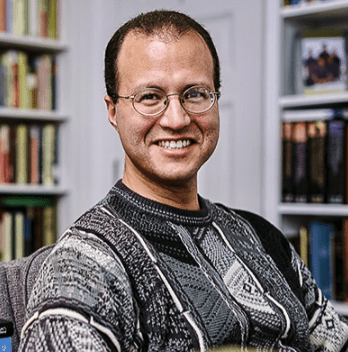
Have the courage to go wherever the texts and the evidence lead you.
Theological commitments should be continually refreshed as we see more of the light of Scripture.
To do the reverse—reading Scripture as our theological commitments allow—is to betray the foundational theological commitment: prima Scriptura.
Joey Dodson
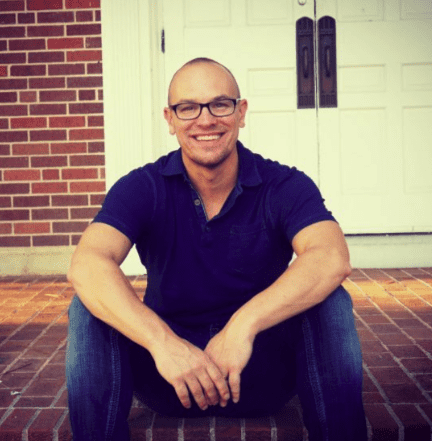
I’ll never forget the day when I was sitting among other recently admitted post-grads at the University of Aberdeen in the presence of the I. Howard Marshall. Make no mistake about it: although we remained in our chairs, we were sitting at Howard’s feet.
Humbly and gracefully, Howard allowed us to ask him a number of questions. I think it was Mark Deneui who asked something like: “Out of the host of students you’ve supervised throughout the decades, is there one factor you’ve found that separates a great scholar from the rest?” Howard responded by checking things off the list. It wasn’t intelligence—all of his students had that. Neither was it a good work ethic—to be in a PhD program assumed that. Howard continued discarding the very qualities many of us considered set us apart: resilience, pedigree, proclivity to languages, and so on.
Finally, Howard came to his conclusion. We braced ourselves for it. We couldn’t wait to hear the opinion of one of the best New Testament scholars in the history of the academy. A quiet hush filled the room when Howard said that, throughout his tenure, the one trait that made a student emerge from the already extraordinary crowd was creativity.
John Anthony Dunne
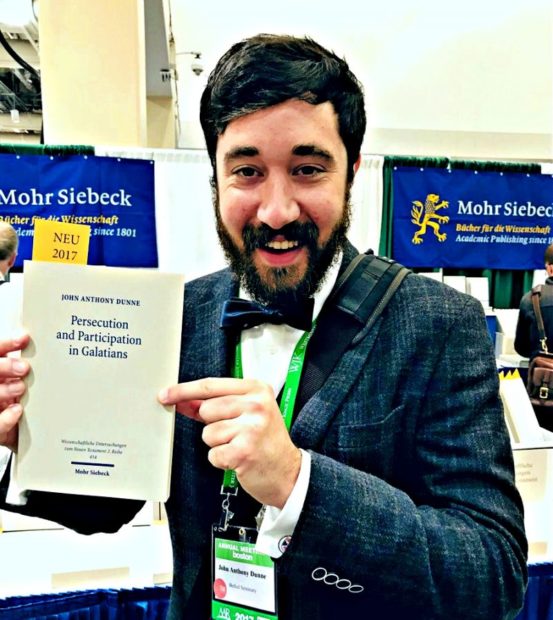
The kind of biblical scholar that I admire is someone who has a contagious passion for understanding the text in all of its facets, a calling from God that compels them, and the desire and ability to contribute in meaningful ways to both the academy and the church.
Seth Ehorn

What makes a good biblical scholar? Well, many things, of course. But one thing I seek to embody in my own work and to impart to my students is fairness to others, especially when I disagree with them.
One ancient moralist saw this as an essential part of his pedagogical program and I think this is still sound advice for students and scholars:
“I determined to record them like the rest, if for no other reason, at least to show persons who undertake to set others right that they must each study with care the arguments of those they impugn, and must not mislead the inexperienced by detaching expressions from different contexts and attacking mere words apart from the things to which they refer” (Plutarch, Moralia 1086C).
Grace Emmett

For me, what makes a good biblical scholar or theologian is putting all your cards on the table.
Paul’s challenge to the Thessalonians to “test everything; hold fast to what is good” has more or less been my mantra for the past year as I’ve found myself testing (and retesting) assumptions I had about the texts I’m working with, as well as testing (and retesting) the conclusions I’ve started to draw from my research.
I hope that in the midst of that process, I’m heeding Paul’s advice and holding fast to what is good (or at least, as far as my own work goes, what has the potential to be good!). Scrutinizing all my assumptions and commitments about the biblical texts I’m working on is proving to be quite a painful process, but I’m becoming more and more convinced of the necessity of doing so.
Working to expand our self-awareness beyond the point of comfort brings a deeper level of rigor, and this takes on a unique dynamic for those of us for whom the Bible is more than just words on a page but a collection of relational texts and a source of authority in our lives.
So, here’s to continued intellectual “card laying” and holding fast to what’s good.
Craig Evans

A good biblical scholar or theologian knows well the primary literature and the original languages.
Jill Firth

A good biblical theologian pays attention to what God actually says, like the prophetess Huldah (and unlike Eve). A good biblical theologian discerns patterns in God’s work in the world, and gives God praise, like Miriam, Deborah, and Hannah. A good biblical theologian carries the good news about Jesus to others, like Mary Magdalene and the Samaritan woman in John 4.
A good biblical theologian teaches the way of God more accurately, like Priscilla. A good biblical theologian avoids leading others into immorality (unlike “Jezebel” of Thyatira). A good biblical theologian works in a team, like Junia, Tryphaena, Tryphosa, and the beloved Persis.
A good biblical theologian combines skill in Hebrew and Greek with a deep desire for God, like Paula of Rome. A good biblical theologian enters into informed dialogue with the thought world of their time, like Macrina the Younger. A good biblical theologian brings rich insight by integrating scriptural reflection with devotion, like Julian of Norwich.
A good biblical theologian promotes engagement with the Scriptures in accessible language, like Marguerite Porete, Marguerite de Navarre, and Katharina Schütz Zell. A good biblical theologian engages in clear thinking and writing, like Susanna Wesley. A good biblical theologian looks for kingdom culture change, like Hannah More and Sojourner Truth.
A good biblical theologian brings biblical background to life, like Dorothy L. Sayers. A good biblical theologian displays Christlike character and actions, like Australian indigenous leader Angelina Noble. A good biblical theologian is like Mary of Nazareth, who treasures all God’s words and ponders them in their heart.
(With thanks for collaboration to Moyra Dale, Elizabeth Culhane, Laura Paul.)
Alan Garrow
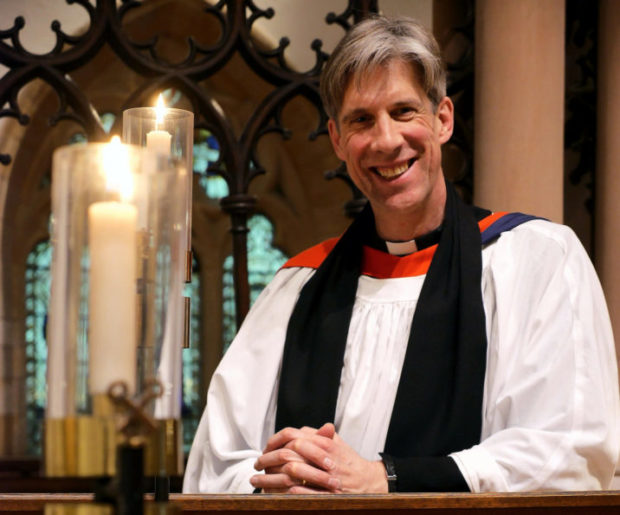
If I had to pick a word, it would be “imagination.”
We work in a field where there are a huge number of unknowns and lots of ways of approaching a given problem.
To stop ourselves banging our heads against the same walls in the same way, we need imagination to keep finding new ways of approaching at old questions.
Timothy Gombis

Humility: Submit your work on the text and invite the critique and examination of others without defensiveness. Others help to improve your contribution.
Humility reminds you that you are not your work. If it stands or falls, you are still loved by God.
Humility makes you immensely happy!
John Goodrich

This is a good question. I think the best biblical scholars and theologians make bold propositions while being meticulous in their argumentation. At the same time, I think it is most enjoyable to read those scholars whose writing is clear and demonstrates immediate relevance for people’s lives. In other words, we should all aspire to be John Barclay.
Joel B. Green

Among those who read the Bible as Christian Scripture, the best biblical scholars genuinely love Scripture, and come to its pages ready to hear God’s address. They exhibit both a certain posture vis-à-vis the text and their own formation in relation to it, and a commitment to the hard work of reading Scripture that takes seriously the nature of the text.
The former involves the life of discipleship, of Christian formation, of worship, and of prayer. As I have written elsewhere: “Formed by our reading of Scripture, we become better readers of Scripture. This is not because we become better skilled at applying biblical principles. The practice of reading Scripture is not about learning how to mold the biblical message to contemporary lives and modern needs. Rather, the Scriptures yearn to reshape how we comprehend our lives and identify our greatest needs. We find in Scripture who we are and what we might become, so that we come to share its assessment of our situation, encounter its promise of restoration, and hear its challenge to serve God’s good news.”
The latter comprises the scholarly work of making the biblical languages one’s own, of finding a home with other readers of Scripture who reflect on its contexts, of exhibiting hospitality to interpretive traditions other than one’s own, and of patiently exploring with others the significance of Scripture’s witness within and to our world. This means, of course, that it is never enough—at least, not for “the good biblical scholar”—simply to live within the world where those biblical materials originated. Good biblical scholars recognize that their work must be set within and engage the grand tradition of the church’s faith and life in service to God’s agenda in the world.
Good biblical scholars don’t think of these as separate parts of the job description, this concern with Christian formation and with engaging biblical texts faithfully. Together, they comprise the singular vocation of the biblical scholar.

Nijay Gupta
Collaboration, curiosity, endurance, creativity, passion, courage (willing to challenge stubborn consensuses), and dedication. Many of the virtues of a good detective!
I would also include social and emotional intelligence, but we all know famous scholars who bombed in this area.
Matthew Ryan Hauge
A good biblical scholar brings the text to life.
The Bible is about meaning. And whether you are a Christian or not, the Bible can teach us about living a life that is meaningful.
Christoph Heilig

For me personally, a good biblical scholar is someone who enriches the discipline not only, and not even primarily, through his or her publications, but also through the way he or she interacts with colleagues, especially those who do not yet hold powerful positions or might never do so.
I am reminded of people for whom self-interest is not only topped by enthusiasm for the subject matter of the discipline, but also by an interest in the individuals who constitute that field, persons you can rely on, always willing to support, without envy or ulterior motives, rejoicing over your successes, sharing the pain of your daily struggles as a scholar.
In particular, I am thinking of the kind of senior scholar who carefully reads through an article by a graduate student that interacts with the work of that expert and who then gives gracious and motivating feedback; a person who does not consider him- or herself to be too good for waving across the book hall at SBL upon recognizing a former student or acquaintance; someone who is not only aware of the manifold and crushing pressures that young scholars feel within today’s academia, but who also works actively towards creating an environment that allows for free spaces, creative development, and individual career paths.
Isaiah Hoogendyk

Honest and humble engagement with the entirety of Christian history.
This includes the writings of the apostolic fathers and unanimous consent of the church fathers, ecumenical councils, creeds and confessions, holy tradition and magisterial authority, whether before or after the Protestant Reformation.
Joshua Jipp
A few things come to mind for biblical students who want to be scholars and teachers:
1. Work hard to know the primary sources that give us windows into the ancient world/world of the Bible.
2. As you do that, make sure you don’t get lazy or give up time reading the Scriptures (and when appropriate, in the original languages).
3. Work to know the history of biblical interpretation. But situate your work and your thoughts with respect to the primary texts first!
4. Don’t be afraid to be creative! Pay attention to what’s going on in the world. Read, think, and ask questions that have existential/ethical significance. In other words, don’t just stay in Bible-land all the time.
5. Related to #4, being a biblical scholar requires a lot of hard work and discipline, but devote yourself as best as you can to committing yourself to your family, friends, church, etc.
Chris Keith

One thing that makes a good scholar is the ability to be an original thinker. In one sense, this means the ability to approach problems from new angles. In another but related sense, this means the ability to see the edifice of a scholarly discourse and seize upon an aspect of it that is assumed throughout the discourse but not thoroughly interrogated. Sometimes, the new vista comes by yanking one of the foundation stones out.
A second, more practical thing that makes a good scholar is a willingness to take yourself seriously, but not too seriously. This is a hard balance to strike. You have to care enough about the subject to work hard on it, focus on it for years, and consume as much prior scholarship on the issue as you can. You have to be invested. But you can’t take yourself so seriously that you can’t handle criticism of any kind, or can’t acknowledge that you were wrong on a given point. You’re going to be wrong at some point or another, and you’re also going to be criticized at one point or another. Learning to sift through the helpful criticism and the irrelevant criticism is one of the important skills we must acquire, but is nowhere formally taught.
Andrew Kelley

Although I am presently working as a local pastor and not doing as much scholarly work right now, I learned a lot from my time at the University of Edinburgh during my PhD. As I reflect back on scholars and peers that I respect and consider what led to successes and failures in my own scholarship, I can offer four qualities that I believe make someone a good biblical scholar or theologian.
I think these probably apply to more than just biblical scholarship, but in my own life they have proven to be essential to sustain work in this complex and challenging field.
1. Discipline
I think that it is easy to buy into the myth of genius or innate talent. There is this common notion that there are some people out there who are just always experiencing flashes of genius and can barely make it to their computer before they explode with brilliant articles and monographs. The reality is the opposite. The best scholars that I know are the ones who faithfully and consistently put in work on a regular basis. They aren’t chasing the lighting strike of a discipline-changing idea. Instead, they do good work as often as possible. And from that, great ideas emerge.
2. Perspective
“I am not my work.” That is something that I repeat to myself on a regular basis. It is so easy to allow our spirits to rise and fall with the success of our ideas within the world of academia. This kills people. The quality or popularity of our work (although not totally unimportant) is not the measure of us as human beings. We need perspective.
3. Grit
Failure is inevitable. Learn to get back up early and often. Don’t let your failures stick with you for too long.
4. Honesty
It is tempting to force our ideas onto the biblical text—especially when we have invested months and even years into crafting them. We must allow the text to shape our ideas. This sounds like a no-brainer, but it is so easy for us to see what we want to see.
Michelle Knight

In my experience, it is the ability to listen that makes a great biblical scholar.
With a receptive posture and a generous hermeneutic, the scholar listens to the text, to its most influential interpreters, to insightful voices that might otherwise be silenced, and above all, to the still, small voice of God.
Karen Langton
Always be willing to see your own weaknesses and strengths and know when to seek help.
Always be willing, hoping, to have your argument proved false, but don’t give up.
Reconsider, redesign, and rediscover.
Timothy Larsen
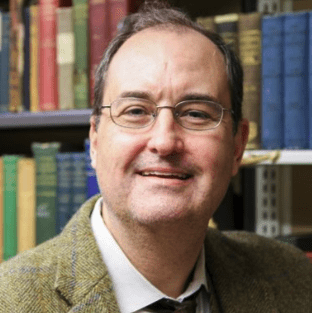
Faithfulness without fearfulness.
Anthony le Donne

Short answer: Honesty.
Honesty on two levels. Honesty with the material (be it text or topic or person) under discussion.
And honest self-awareness that acknowledges the scholar’s biases, motives, programs, and the systems of power or ideology to which s/he is beholden.
Peter Malik
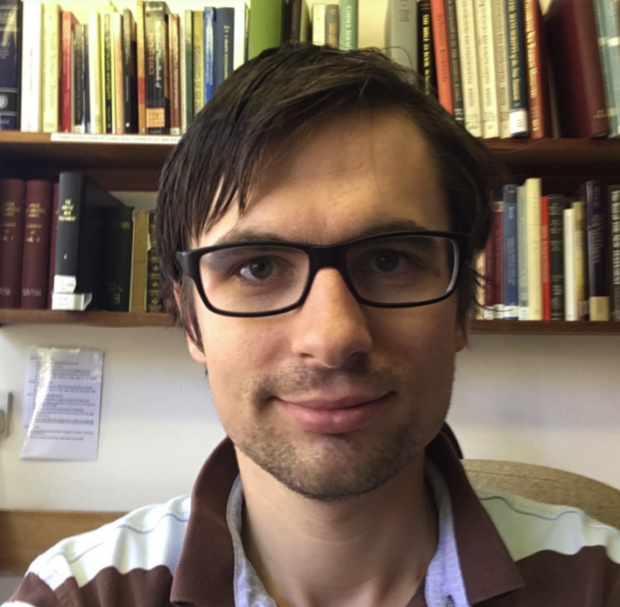
Plenty of curiosity, along with a good measure of endurance (and occasionally guts) to carry it out.
Elizabeth Mburu
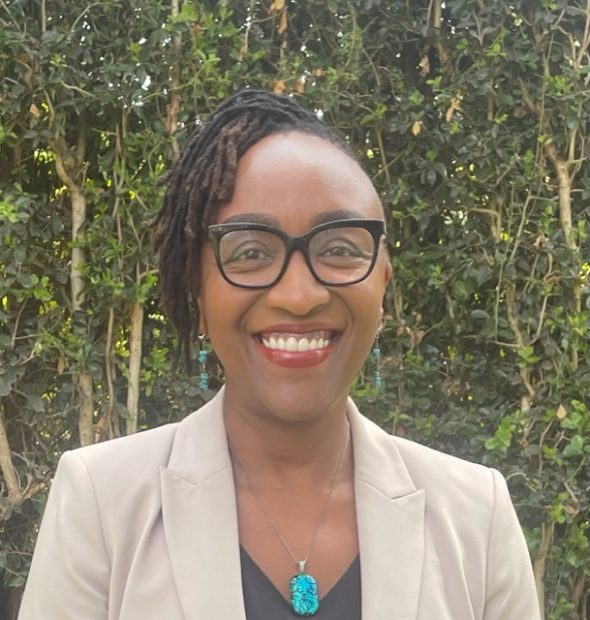
There are several qualities that make a good biblical scholar, but I will only focus on five.
1. Humility
We must recognize that even if we are “experts” in our own narrow fields, we don’t know everything. There is always room to learn more, and sometimes from the most unexpected quarters. I have found that ordinary readers (lay people) sometimes provide insights into the text that we might not otherwise see.
2. Grace
This is particularly important when it comes to responding to critiques about our work or even to differing opinions or ways of expressing the same ideas. In the end, we are serving God and our scholarship is meant for the benefit of his church. We must strive to maintain, enhance and even embrace unity in our diversity.
3. Knowledge
We must be life-long students of the worlds behind, of, and in front of the text. The world is in a constant state of motion and new discoveries are being made every day. Stagnation is not an option.
4. Courage
Finally, we should not be afraid to challenge our assumptions and to try new methods. Since we are not aware of our blind spots, we should be cautiously open to finding ways of unearthing them.
5. Excellence
The fifth is excellence within our giftings and abilities. All our work should be done to honor God. Why not strive to do the best that we can in our research, writing, publishing, presentations, and teaching?
Grant Macaskill
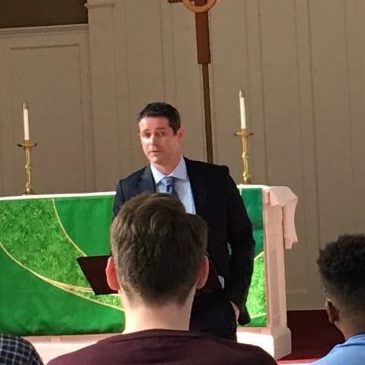
I’m sensitive to a number of things on the back of the intellectual humility work I’ve done recently, and obviously such humility would be a key marker: we are all imperfect, finite thinkers who are dependent on God and on other creaturely thinkers, and have to be open to exchange with others if truth is to be comprehended. John Barclay, Simon Gathercole, or Loren Stuckenbruck are all lovely examples, I think, of such openness, by contrast to some others who may be rather more entrenched in their own positions.
I think humility is wrapped up with other characteristics, though, and I’ll just mention these quickly. The first is gratitude: humble thinkers recognize their dependency on God and on others and show proper gratitude to the giver for the gift. That allows them then to share the gift with others. The second is patience: humble thinkers wait and seek to listen while they are waiting. The third is kindness: if we really allow what we are studying to master us, we must share in God’s generosity. Again, John, Loren, and Simon are really lovely embodiments of that.
All, I think, goes with a particular way of thinking of our relationship to the object of our study. Do we see our task as one of mastering biblical texts, or allowing Scripture to master us? If the latter, we see the place of theology in a very different way.
Joshua Mann

What makes a good scholar-theologian? Here are seven things:
1. Careful, patient research, the driving motivation of which should be increasing knowledge (rather than the host of real but lesser motivations, such as CV-building, funding, tenure, esteem, deadlines, etc.).
2. Wariness towards scholarly consensus, behind which often hide many unjustified assumptions, unchallenged claims, and unconsidered evidence (and, at times, laziness).
3. Courage with restraint, i.e., a willingness to make a justifiable, bold claim or critique while at the same time maintaining reasonable deference towards others.
4. The ability to communicate concisely, clearly, and capture the interest of your audience (and to improve in this area year by year). This includes writing and teaching, as well as less significant contributions such as commenting or asking a question at a conference.
5. Humility to hear and consider critique without hasty defensiveness.
6. Awareness and sensitivity toward the impact of one’s scholarship outside of the guild, including the impact upon faith communities and popular audiences.
7. Self-awareness, including a knowledge of one’s own abilities and limitations, as well as the impressions one makes on others.
Of course, to these other qualities might be added. However, in my experience and in light of the scholarly counsel I’ve received over the past fifteen or so years, these stand out as the most important.
Katie Marcar

A good biblical scholar is discerning. This discernment is exercised at key points in the research process. First, a good scholar chooses worthwhile research projects to invest time in. Time is a limited commodity, so choosing the right project is paramount.
Second, a good scholar chooses the right conversation partners for a given project. There is just too much out there for any single person to read and understand: choosing which books to read (to read seriously) is an important decision. For example, a good scholar will choose to learn from the best teachers, and will interact with the strongest opponent of his or her position instead of a strawman. A good scholar will also be able to recognize and acknowledge side issues, and offer well-reasoned views on them, without being mired down by them.
Finally, scholarly discernment is seen through a well-crafted argument. Time is also a limited commodity for the reader (not just researcher!). A discerning scholar will be able to provide her readers with all of the information and evidence she needs to make her point in the clearest and simplest way possible.
John Meade
I have always appreciated reading and listening to those scholars who have both a command over the relevant classical languages and a direct knowledge of the primary sources in their disciplines.
These same scholars can also bring their skill and knowledge to bear on old questions and problems to create new and fresh solutions in constructive conversation and interaction with other scholars in the guild. I aspire to be this scholar and encourage my students towards the same.
Walter Moberly
I’ve always valued a quote from Luther: “It’s not reading books that makes a theologian, but living, dying, and being damned!”
Raymond Edward Morehouse

I took the first steps of my journey to becoming a biblical scholar because I believed, as I still do, that the Bible is the Word of God, and that as a person of faith, I had an obligation to listen to its words and submit to its authority.
Some might argue, and with fair points, that such commitments can create serious difficulties in really grappling with a text the way the biblical scholar must. Nevertheless, through all the twists of turns of my journey, I have found that these commitments are actually quite helpful while trying to make the imaginative leap into the worldviews which created and passed on the biblical texts.
Not all texts, to be sure, were always received in this way, but it is hard to read biblical material (say, the writings of Israel’s prophets or Paul) and conclude that they did not earnestly believe what they were passing on. That earnest belief is not incidental to many of the questions biblical scholars seek to answer, and that observation does not only apply to questions of interpretation.
Does an account, for instance, of the transmission and editorial process which bequeathed the documents we now study only make sense if the ancient scribes were disinterested in the content of their project? A disinterested scholar may find accounts of disinterested scribes compelling, but is attributing such disinterest to the ancient context valid?
I would argue that whether we share the theological commitments of ancient Israelites or Christians or not, we have to acknowledge that they held them. And if they held them, then we must account for them, and if we have to account for them, then we must be at least able to hold that belief steady in our minds as we make that account.
So that is how I would answer the question, though with some reservations. A good biblical scholar remembers that the Bible is a text created by people of faith for people of faith and remains with us because people of faith are still deeply invested in its content. The biblical scholar who is aware of this and even sympathetic is not thereby at a loss.
On the contrary, I have always found the most compelling works of biblical scholarship to be those that take these commitments seriously. I hope to do the same.
Suzanne Nicholson

I always tell my students, “Context is everything!” Without understanding the historical and literary contexts, it is impossible to interpret the passage well. Words have different meanings in different contexts, and it is very difficult to understand irony or the overall tone of a passage without knowing the situation that the author addresses.
You can’t be a good biblical interpreter without looking at the text closely and seeing what is really there. Take time to suck the marrow out of the text! But be careful not to read two thousand years of Christian theology into the passage; see what THIS author says. Every word matters. Ask why the author made the choices that he did. Sometimes asking why something ISN’T in the text can be helpful: Why did the author choose this word and not another? Look at the structure of the passage: Why is it organized in the way that it is? How does the structure highlight the meaning? Consider the book as a whole: How does a single passage reinforce the themes of the book? When looking at a text, don’t jump straight to application. Make sure to observe and analyze the passage in its own historical/cultural setting before trying to apply it to the twenty-first century—often adjustments need to be made to apply the universal principle to our own cultural
context.
For preachers, remember that the Holy Spirit is involved in the preparation of the sermon, not just the delivery. Good exegesis is the most important part of a sermon. It doesn’t matter if you speak well; without preaching the gospel, you’re just giving another TED talk.
Peter Oakes
A good biblical scholar or theologian thinks through their writing, page by page, from the perspectives of their various types of expected reader, from scholars, to students, to church ministers and, if appropriate, to church members.
Kevin O’Farrell

A good theologian knows what they are doing and why they are doing it, asking the vocational questions of what it means to be a theologian and what it means to do their task well. A good theologian keeps these questions close at hand, since they clarify what it means to be a theologian in one’s own setting.
When these questions shift to the margins, one’s research and thinking often loses direction and a sense of purpose. Theology can easily become an insular activity that is short-sided and unaware of why the great sacrifices of time and resources are put into the task.
And without these questions at hand, it is easy to fall into the intellectual vice of “curiosity,” which performs the academic task in seeking something like comprehensive knowledge or omniscience. This can prove one’s cleverness, but it does not make a good theologian.
Oliver O’Donovan has argued that a good theologian is marked more by their ability to read than by how much they write. It seems that this sensibility is often lost in a publishing-driven approach to theology, which values production above all else. It is more important to learn to ask questions of a text than to offer a judgment of a text.
A good theologian is creative—being attentive to the theological tradition without being a slave to it. A good theologian affirms the provisionality of their own work, which is never a final word but one that participates in the ongoing task of theology.
Gavin Ortlund

“What makes a good theologian or biblical scholar?” Many things could be said about this question, involving a range of both academic and personal qualifications. Here I’ll just offer a few suggestions—this is by no means an exhaustive list, and I should mention up front that these values assume a level of Christian commitment.
1. A humble heart
I can think of no finer criterion for what makes a good theologian than what the Almighty says in Isaiah 66:2: “this is the one to whom I will look: he who is humble and contrite in spirit and trembles at my word.” It is frighteningly easy to engage in theology and study of the Bible without humility, without trembling. Yet all the intelligence and technical expertise in the world are pointless if they are not accompanied by a humble heart. It is only within the posture of humility that God can be known at all. “God opposes the proud but gives grace to the humble” (Jas 4:6).
As St. Augustine put it, “If you should ask me what are the ways of God, I would tell you that the first is humility, the second is humility, and the third is humility. Not that there are no other precepts to give, but if humility does not precede all that we do, our efforts our meaningless.”
2. Hard work
There are no shortcuts to being a good theologian or biblical scholar. It is not acquired by learning a particular technique, and it is not fueled by a burst of adrenaline. It is a matter of diligent work over long spans of time, and is best fueled by a genuine curiosity in the subject matter. Being a good theologian or scholar will involve the development and continual honing of a set of skills in your area of expertise, using the full range of scholarly resources available to you—mastering the literature in the field, learning the relevant languages, and so forth. All this is very hard work.
The good news is, when you passionately enjoy your work, it doesn’t always feel like hard work. So try to have fun!
3. Avoiding over-specialization
One of the unfortunate and somewhat artificial characteristics of contemporary biblical and theological studies is the overly rigid division of scholarship into distinct fields. Happily, there are pockets of resistance to this these days, so that biblical scholars are trying to learn from theologians, and theologians from biblical scholars, and so forth. But the general situation remains.
A good student of the Bible and theology should recognize that because truth is one, overspecialization inevitably distorts. Of course, we cannot study everything all at once, so we have to specialize to some extent. But we should also recognize that our own area of expertise cannot be absolutely sliced off from other fields of scholarship, and we should be open to dialogue and learning from others.
So, if you are a Reformation scholar, dip into the church fathers that interest you now and again. If you are a Pauline scholar, don’t hesitate to dip into the scholarly conversation about the identity of the Nephilim in Genesis 6, if that interests you. If you’re a systematician, try your hand at a biblical commentary when you have the opportunity.
While you’re at it, the more you read history and literature more broadly, and the more you engage intellectually wherever your curiosity happens take you, the better scholar you will be for it. You may be amazed at the connections you discover.
4. Remembering your blind spots
Wisdom requires cultivating a keen sensitivity to the fact that you have blind spots. You don’t see everything perfectly. This means that you must navigate life and theology with sensitivity to the distinction between what you don’t know, and what you don’t know that you don’t know.
It is often not sheer ignorance that will get you, but ignorance about your ignorance: not the unchartered territory, but the stuff that is completely off your map.
Much theological error happens not because of an outright error, but because of insensitivity to a broader range of concerns. So when you hear something strange, listen very carefully. When you are fielding criticism, give it time before you make up your mind how to respond. And keep open to new insights and breakthroughs coming from unexpected directions.
5. Full-blooded sincerity
Being a good scholar takes courage. It requires being more concerned for the truth than the social and career consequences of your work. True advances are made by those who are willing to buck the party line, to challenge the status quo, to stand contra mundum when the need of the hour requires.
Related to this, studying the Bible and theology has a deeply existential aspect to it. Ultimately, it is a coram Deo matter that we engage in before God, involving not just our thoughts but our entire selves. As Calvin put it in the Institutes, “Recognition of [God] consists more in living experience than in vain and high-flown speculation.” Ultimately, being a good theologian or biblical scholar involves not just how you think, but who you are.
Amy Peeler
What makes a good biblical scholar? Passion for the subject. If you are going to inspire from the lectern or the pulpit or with the pen, you have to love what you are talking about.
Thorough knowledge of the languages is a must, as is constant engagement with the historical and hermeneutical conversations throughout time, across the world, and in your own setting.
Lucy Peppiatt

There are a number of ways to answer this question. I see the task of a biblical scholar as different from a systematic theologian, but as systematic theologians are taken up with reflection on the doctrine of God, this can’t be done without a deep engagement with scripture.
For me, good theologians are aware of their responsibility to serve the church and of the pastoral implications of their views. In other words, theology done as a purely academic pursuit is something different, and someone can be good at that too, but I am answering a different question.
Good theologians are those who are able to think and speak truthfully about God, to communicate that well and to help others to understand God better through what they do.
Consequently, there are pastors who are good theologians and academics who are good theologians. Both pursuits require prayer, humility, listening to God and to others, and study, but how a pastor and an academic spend their days will probably be very different.
An academic theologian will spend much of their time in research, teaching, and writing, which in my view should also be providing valuable resources for pastors.
Good theologians are both passionate about their subject and careful with their words and expressions about God, aware that how we speak of God is retelling the story of who God is.
So, as well as attempting to think and speak truthfully about God, I think that good theologians have a sense of the contingency of their work; God has made himself known in Christ by the Spirit, but there is so much yet to discover. This process of discovery constitutes the ongoing conversation.
Becoming a good systematic theologian entails a lot of reading: of the Bible, of ancient texts, of key works throughout the ages, and of contemporary developments and debates. I think only a few people are well versed in all texts and all topics. Most of us can only become “good theologians” in relation to our own small area.
It helps, however, to be aware of the questions that systematic theologians ask and why. Once someone has done that, it’s a case of taking the time to discover how these questions have been answered through the years and what that tells us about God, about the world, and about humanity.
Good theologians are inquisitive, enjoy discussion and debate, are prepared to change their minds, and admit that there is always so much more to learn!
Nicholas Perrin

The key element to any theologian’s lasting success is the ability to approach their task with the wonder and awe of a beginner. Humble curiosity is the lifeblood of all our teaching, research, and writing. Without it we slowly die—and worse, take our audiences down to the pit with us.
Jeanette Pifer

Humility, faith, faithfulness, worship.
James B. Prothro
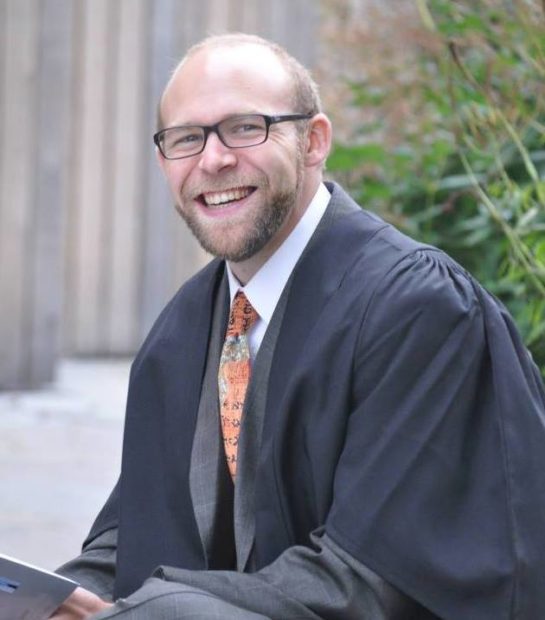
What makes a good biblical scholar or theologian? What advice would I give students—or gave myself ten years ago—looking into advanced degrees? For those who are interested or who just compulsively read this blog, here are five suggestions amid many better ones already written in this series:
1. Love it!
There are plenty of things you could line your CV with, but find something that actually makes you want to get up from the table and hit the library. You’ll be better poised as a colleague, researcher, and teacher. And if your project drives and excites you, it will be easier to muster the Sitzfleisch needed to read another thousand pages of Barth or learn that obscure language because doing your project well is worth it. (Also, learn the word Sitzfleisch. It’s a good one.)
2. Read more than you write
More reading = better writing. If everything is output with no input, you’re left running on an empty tank or churning out “spin” on the same stuff. The scholars I admire are always interested in something (in their field and out of it), always turning over new stones, and their specialties are better for it.
3. Learn other languages, whether you need them for your research or not
It’s not just about learning foreign words for things, but about reformulating ideas and even new ways of thinking. I’m constantly inspired by scholars who can reformulate thoughts with diversity and creativity. They’re good at the jargon of their sub-fields, but not bound by it, and can move outside the thought patterns entrenched in their disciplines to bypass old stalemates.
4. Encourage people
Scholarship can get lonely, and competitiveness can make us acerbic (even in faith-based institutions). We all need people into whom we can pour ourselves and from whom we gain courage and joy. Choose a few, give them your time, and try to encourage other scholars. We are all interdependent.
5. Find art that you can get swept into
Whatever kind of art teases your mind and spirit to think and feel—music, film, opera, oils, finger puppets—it can calm, energize, inspire, and motivate. It doesn’t matter if its “serious” art: impressing cocktail colleagues is not the point. Maybe only Wagner can capture the pathos of your office, maybe a cathedral’s rose window fills you with peace and awe before that seminar. For me personally, it’s usually one of the Rocky films (just not no. 5).
David Ritsema

I think the answer to that question can only be measured based on output. Good scholars can be recognized either through their writing or through their teaching.
I’ve been the beneficiary of wonderful teachers, and without them the guild would not continue. That said, most scholars would measure other scholars on the basis of the quality of literary output.
Here, I think, is a distinction that should also be made between quantity and quality. Profundity is not equal to perspicuity. Thus, good scholars are determined by their good teaching or their good writing.
Rafael Rodriguez

It’s hard to give a one-word answer that doesn’t sound trite. I’ll offer a hyphenated cheat: “confident-humility.” Biblical scholarship requires a willingness to keep every question on the table and to listen to others with a humble sympathy even when we disagree with them.
But it also requires some gumption to add your own voice to a conversation that already hears from some impressively insightful voices. I find that I tend to be either (and alternately) confident or humble. In my best moments, I hope I exhibit both.
As for advice, I was once encouraged by a professor to change my mind slowly. While we need to learn from and incorporate new data and knowledge and arguments, we ought also to consider carefully the implications of abandoning previous convictions. That sounds to me like wisdom.
Brian S. Rosner

What makes a good biblical scholar? Lots of things, many of which have to do with self-awareness. In no particular order:
A good biblical scholar is committed to patient historical, literary, and theological analysis of the text on its own terms.
A good biblical scholar doesn’t believe the old adage, “What I’m not up on, I’m down on.” They don’t think something isn’t important if they don’t know about it already and are open to learning from all comers. But he or she is not trapped by every new fad or methodology.
A good biblical scholar has a high boredom threshold and can chew on the same bone for years, if not decades. But he or she is also easily distracted and incurably curious.
A good (Christian) biblical scholar does not divide devotional from academic reading. He or she reads the Bible rigorously and as one who believes the apostolic witness to God’s work in Jesus Christ and lives their life as part of a local community of faith.
A good biblical scholar knows their limits and is a serial collaborator with other biblical scholars and across disciplines.
A good biblical scholar is constantly making connections within and across the biblical texts. He or she loves the details as well as the big picture, both the trees and the woods.
A good biblical scholar reads widely to appreciate and learn from good communication—not just N. T. Wright and Lynn Cohick, but also from the likes of Tim Winton and Marilynne Robinson. He or she believes that the point of studying the Bible is for the benefit of others and knows that if they can’t communicate their findings, there is little point in studying the Bible at a scholarly level.
Clare K. Rothschild
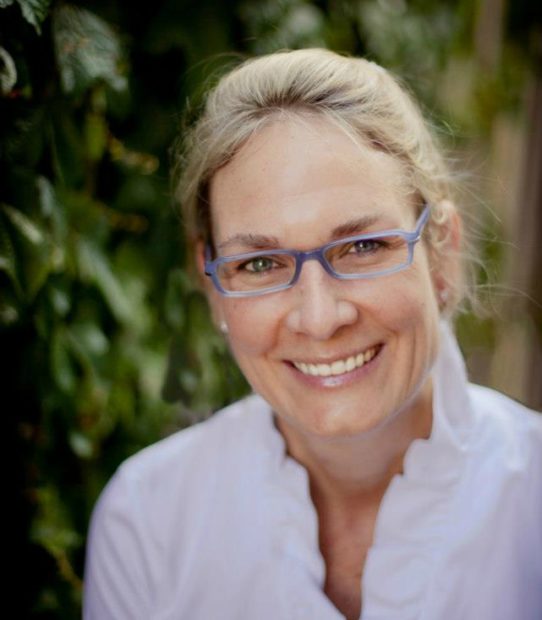
I would say that a biblical scholar is only as good as her resources. A good library or equivalent access to primary texts, lexica, etc., make or break our work.
Paul Sloan

Fascination with the project—if you’re not interested in the topic you’re researching, you’ll burn out.
Purposeful reading—i.e., aimless reading won’t stick.
Flesh and blood conversation partners—i.e., having someone you can talk to about your ideas is essential both for processing information and conjuring continued love of the work.
Discipline.
Isaac Soon

As a junior scholar, I don’t consider myself either a good Bible scholar or theologian (yet!), so I can only offer my own expectations based on my encounters with others. I’ve organized these into six key areas:
1. Awareness and admission of bias and social location
As an undergraduate, I happened upon N. Clayton Croy’s Prima Scriptura and in it one of the first things he suggests exegetes do is write out a paragraph detailing their upbringing, gender, race, ethnicity, economic status and other elements of social location (I would also add sexual orientation and bodily ability). I think this is really wise and as the recent work of David Horrell has shown, we all know that we approach material with biases, yet we seem blithely unaware of how they may be specifically affecting our interpretations. Being very aware of our own experiential and embodied differences means that we can “supplement” our blind spots.
It also means that we take seriously perspectives that are different from our own. For example, I listen very carefully to female and Jewish interpreters as I am male and come from a Protestant tradition. Being aware of my own perspectival limitations, I listen closely, knowing that I don’t hold a monopoly on truth. Explicit awareness of our biases brings much-needed humility to scholarship.
2. Willingness to change their minds
Good scholars are also willing to admit when they don’t know something or when they’re wrong. I’m always impressed by scholars who change their views based on incoming critique and new evidence, even to the point that revised versions of their published work are completely altered. I’m suspicious of scholars or theologians whose views never change. One wonders if they are taking new evidence seriously or just dogmatically (and perhaps apologetically) defending their own unique position.
3. Primary texts and foreground literature
It has been mentioned that good scholars know the data, and it is true that nothing can replace knowledge of the primary texts. Breadth and depth are vital. At the same time, however, the approach to the primary texts is just as important as the texts themselves. Thinking about literature outside the Bible as “background literature” already reveals a predisposition that supposes a hermeneutical hierarchy and affects interpretation. These “background texts” are to be mined for information in order to expound upon the Bible.
Alternatively, I think great scholars read sympathetically in order to understand para-canonical texts (texts around the canon) on their own terms first before bringing them into dialogue with the Bible. Why does this matter? It comes down to appropriation. The tendency is to hijack other materials. But, reading texts solely in order to mine them for information is a destructive task, one that undermines and distorts our understanding of extra-canonical texts. Reading with our sources, however, fundamentally changes the way we view the “background” material, making for deeper engagement of the sources themselves, as well as the light they shed on our biblical subject matter. Our sources outside the Bible are not just a means to an end but an appropriate end in themselves.
4. Generalization over specialization
For those who have done or are undergoing theological study, the formation of bible scholars or theologians is through specialization. While this is necessary, especially for doctoral work, great scholars find ways of gaining competence across sub-disciplines and even fields. When I was at Oxford, I was told that if your first book was on Paul, your second should be on the Gospels (or the Catholic epistles, etc.). This kind of generalization is necessary, not only for jobs (which are few and far between), but also for the quality of scholarship in one’s own given area of expertise. I’m not endorsing a return to a golden age of pre-specialization where scholars were both theologians and Bible scholars. Those scholars had a lot less literature and method to grapple with than we have today. There’s no winding back the clock. Good scholars should be able to navigate multiple different disciplines. The more limited your knowledge outside of your discipline, the more limited your contribution.
5. Good writing and accessible language
A well-worn style is a must for scholars working in academic or popular settings. I once heard Alistair McGrath say, “Monographs get you jobs, but popular books get you noticed.” Unfortunately for most scholars, we become very good at writing for an academic audience, but very inexperienced when writing to non-academic non-specialists. The lifeblood of biblical scholarship and theology is engagement by the wider public in our disciplines. If they can’t engage us because they don’t understand us, then we’re really just monologuing in an echo chamber.
This point was driven home to me a while ago when I asked a friend who had no theological study what they thought about a book aimed at a popular level audience by a well-known Bible scholar. My friend said he couldn’t even make it through as he found it difficult to understand and heavy. I was shocked, since I thought that it was clear and relatively “simple.” But, it’s true that scholars and theologians speak a different vernacular than everyday Christians.
I read an interview by a frustrated scholar who said something akin to “it is the pastor’s job to reach up to academic language, not for us to dumb it down.” Such a position is mistaken. Being a biblical scholar and theologian is about service beyond academia. Neither should we always have to rely on pastoral leadership who may only have had a limited amount of time in theological training. We shouldn’t expect them to all be “academic translators,” making clear and simple the complexities of our highbrow discussions, whilst also having to be experts in family, marriage, sex, finance, politics, morality, and so on. Few great biblical scholars/theologians are able to engage on a language level that everyday believers can connect with. It’s something we all need to get better at doing.
6. Partners and parents first
When I open up a new monograph, I often turn first to the Acknowledgements page in order to get a sense of the author and his/her social location. For many PhD theses-turned-monographs, the last paragraph is frequently dedicated to a spouse and children. The challenge of finishing a PhD with a family is always evident, though sometimes you can tell in the language used that it has taken a harder toll on a family.
I read one acknowledgement recently that disturbed me even though I understood what was meant. This author had thanked his wife for “releasing him from parenting” so he could do scholarship. I don’t think a good Bible scholar ever “hangs up” her or his familial relationships, even temporarily. We are spouses and parents before we are scholars. What’s the point of gaining academia if I lose my soul? It sounds harsh, but I think if I’m willing to compromise on those I’ve committed to like my spouse and children, then I suspect I’m also willing to compromise on my scholarship as well. I think there is a correlation. At the end of my life, if people remember me as a good scholar but a terrible father, then I think I’ve failed.
Todd Still
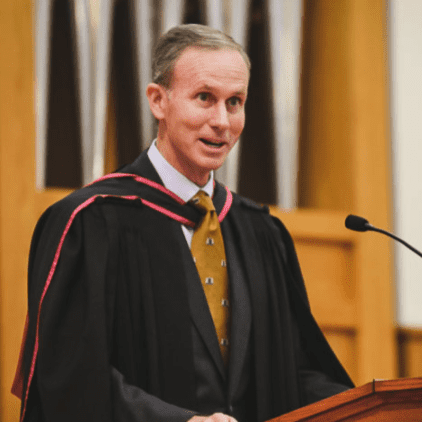
Sympathy, curiosity, industry, creativity, intentionality, honesty, and responsibility.
Maddy Ward

Theology is a bit like a spider’s web, in the sense that cutting a single strand of a theological framework can drastically alter the shape of the whole.
A good theologian understands the web from many angles. They can identify the fundamental tenets of an intricate system. They can foresee the potential effects of disregarding those tenets in advance. They can perceive when an apparently obscure issue is being used as a proxy for the underlying disagreement—and when it is not actually an obscure issue at all. They can spot patterns, echoes, allusions, and possibilities.
This obviously requires clarity of thought—but it also demands empathy and a wide-ranging understanding of context, since personal motivations are so often mingled with doctrinal ones.
Mark Ward

I cannot give a secular answer to the question of what makes a “good biblical scholar,” even though I am deeply grateful for the benefit I’ve derived from non-Christians in the field. “Good” is not a concept whose definition I’m willing to cede to our secular age. “There is none good but one” (Mark 10:18). So my answer to the titular question is unshakably Christian: it’s love that makes a good biblical scholar—love for God and love for his image bearers.
Love isn’t enough to make a (1) good (2) biblical (3) scholar, but it is a necessary starting point. To deserve those three descriptions requires loving the Lord with one’s heart, soul, mind, and strength; and loving one’s neighbor as oneself.
1. A good biblical scholar
Truly good biblical scholars will love the Lord enough to submit to his truth claims in light of the competing claims of the broader scholarly guild. Love will motivate them to do the hard work needed to be responsible and careful, because part of their job is to say to others, “Thus saith the Lord.” You try not to misrepresent those you love. Love for God will insulate good biblical scholars from certain scholarly temptations.
Good biblical scholars must also love their neighbors enough (starting with the household of faith, but not ending there) to keep their scholarship tethered to the church and the world. Academic pursuits do not always have obvious connections to real-world needs, but it is the work of a neighbor-loving scholar to continually seek those connections. Likewise, not all academics are gifted at popularizing, but the best scholars humanize their work by writing as if non-specialists might actually be listening. You get the sense they actually care whether or not others understand the issues they write about.
I was struck by a comment about historian Peter Brown in a recent profile in the Daily Princetonian. The writer observed that Brown’s
empathy as a person and a scholar … colors his work to a rather distinctive degree. His profound interest in others, whether now or in the past, equips him to reconstruct social relations.
Love for neighbor is a direct benefit to one’s scholarship—in perhaps unexpected ways.
Kevin Vanhoozer has commented that the truth of the Bible is discerned only by “right readers read[ing] rightly” (5 Views on Biblical Inerrancy, 207). Every scholar is a reader. A “good” biblical scholar has to be a “right reader.” It’s a dual love that makes him or her one. Love doesn’t guarantee right reading, but it is essential to it, because human goodness consists finally in love of the good.
Alan Jacobs, a Christian public intellectual who humbly disclaims that title, makes this same argument by appealing to an Augustinian voluntarist conception of will, which is in turn equivalent to Jonathan Edwards’ “affection” (and my own definition of “love”):
Fundamentally, it is the reader’s will that determines the moral form … reading takes: If the will is directed toward God and neighbor, it will in Augustinian terms exemplify caritas; if the will is directed toward the self, it will exemplify cupiditas. This terminology is of course Augustine’s version of the Pauline distinction between living spiritually and living carnally. That one can read charitably only if one’s will is guided by charity is a pretty obvious point, yet it is neglected in hermeneutical theory even more than the charitable imperative itself.
(A Theology of Reading, the Hermeneutics of Love, 31)
2. A good biblical scholar
I personally subscribe to something close to biblicism, à la John Frame (the Bible is our ultimate authority and our only perfect, verbal authority; but the Bible itself gives us other epistemic authorities, especially through its teaching on general revelation); but I don’t care to deny the title “biblical scholar” to those who have a different worldview. Quite obviously, atheistic scholar Bart Ehrman is worthy of the title—far more than I am ever likely to be. But naturally, I would prefer it if biblical scholars tried to be biblical. I’d like the word “biblical” to carry a normative force, not merely to delineate a research focus. Only Christ can make that happen, and one day he will: every knee will bow, and every tweed-jacketed, leather-patched elbow will bend.
Before that wonderful not-yet, while we’re stuck in the fallen-already, I’d like to make what I wish were a few tautological observations: bachelors are unmarried, popes are Catholic, and truly evangelical biblical scholars are biblical. They should submit to the Bible not just in their conclusions but in their methodology.
The conventions of the biblical studies guild—from peer review to careful citation practices to the production of festschrifts—contain many goods that truly biblical scholars can make use of, and indeed must. Scholarship is one significant part of the dominion blessing God gave to all creation (Gen 1:26–28). It is therefore fundamentally good along with the rest of God’s works. Scholarship is not a creation of man; it’s a discovery. But the fall has touched all parts of scholarship: sometimes “biblical” and (the prevailing definition of) “scholar” will clash. A good biblical scholar manages to hold the two terms together even when others are skeptical that such a thing is possible.
3. A good biblical scholar
I personally don’t think anyone deserves to be called a scholar unless he or she has “advanced the discipline,” and I have not done this. Scholars add to the store of human knowledge in their respective fields, and that fact makes “scholar” an honorific—and a title I don’t think one should bestow on oneself.
Likewise, “Doctor” is an honorific in Western society, and that’s one reason why getting a doctorate from an online degree mill is illegitimate. (Let another man praise thee and not thine own credit card.) A “doctorate” isn’t even worth much if it isn’t used—or can’t be because the training wasn’t ultimately useful. I think that’s the worst aspect of fake degrees: the people who are supposed to be served by a given “Dr.” don’t get the benefit of a carefully trained teacher. You’re not loving your neighbor if you claim training you don’t possess.
Earning even a “real” PhD simply gives one a small ticket assisting one to earn the further and more important honorific title, “scholar.” I believe in salvation by faith and scholarship by published works.
All my talk about “earning” and “working” complements my overall comments on what makes a good biblical scholar. You can love the Lord and love your neighbor in any profession, even ones that don’t require (frankly) as much life-consuming work as biblical scholarship. But scholarship of any kind requires lots and lots of reading at minimum—and certainly some writing, and likely some teaching. There are many people who teach Bible, love the Lord, love their neighbor, and are not scholars, and that’s perfectly okay.
But if you have the gifting and calling to serve the church and the academy at the same time, and you want to do it well (I speak perhaps to young people aiming this direction), I pray that you will love the Lord and your neighbor enough to work hard to be a good biblical scholar.
Jessica van ‘t Westeinde

Although a tricky question for one primarily self-identifying as an ancient historian or historian of religion at best, my impression of what should qualify a biblical scholar or theologian as good should be what is applicable to what in general makes one a good scholar of humanities.
It comprises yet transcends the study of source-texts and knowledge of languages ancient and modern. Obviously Quellenforschung remains core, yet a good scholar should be open-minded towards other disciplines, willing to see the wider picture of contexts of a text or person studied, thereby critically assessing one’s own discipline.
Creativity, curiosity, and a critical eye are key. Appreciate academic freedom, use it, and be not paralyzed by dogma.
Taylor Weaver

My most salient advice for biblical scholars and theologians is: be aware of the diversity of your discipline, and work hard toward inculcating permeable boundaries for the disciplinary city. Those marginal spaces in the discipline are essential for the future of biblical studies and/or theology.
We all note the importance of historical-critical work in all of its variation. But a survey of some authors points to the importance of a range of thinkers for biblical studies. From the haunting spectres of Derrida and Marx (whose importance ebbs and flows), to approaches refined by Lefebvre, Deleuze, and Agamben, we see the boundaries breached. And for good reason.
See for instance, Laura Nasrallah’s or Halvor Moxnes’s work on spatial studies to note how diverse methods and disciplines intermix. Or, for a recent example, David Horrell’s incisive use of whiteness studies to interrogate NT studies. Or perhaps Cavan Concannon’s invocations of Deleuze. These examples, from scholars who have produced wonderful, incisive works in biblical studies remind us that our disciplines miss out when we champion purity. It falls into auto-immmunity; the discipline atrophies.
If I have one bit of advice, then, it distills down to this. Remember where you came from, accept the past of the discipline, and search out the marginal spaces.
Furthermore, don’t be afraid to experiment with diverse methodologies. Master the relevant literature, and then see if you can test out new, viable futures.
Benjamin G. White

This is a complex question because it requires an attribution of value, which can vary from person to person and generation to generation. But that’s exactly my first point. A good theologian or biblical scholar effectively communicates the content and significance of the gospel within their context.
I make this point first because it is tempting to spend much of one’s life simply mastering the tools of your scholarly trade. But our end goal should never be to master the Bible, but to be mastered by it, and to communicate what that looks like to others. The best theological scholars today, whether Stanley Hauerwas, N. T. Wright, or Kathryn Tanner, are always saying things that perk our ears and allow us to make connections between the world of ideas and the life of the self, one’s family, city, and society (much like the biblical authors themselves). To paraphrase J. I. Packer, there are plenty of people who can articulate orthodox or erudite theology, but few who communicate that theology in a manner that is transformative for their audience.
My second suggestion is a counterbalance to the first. While I think that reading the Bible should not be an end in itself and should always lead to knowing God and helping others along this path, you are less likely to achieve this if you read the Bible poorly. It is necessary to be as erudite as possible, knowing the key languages, the historical context, even modern philosophy and literature. Having a thorough knowledge of at least a couple of major theologians is absolutely essential. Read deeply, but also widely.
Finally, and most importantly, read your books on your knees. The task of being a theologian is next to impossible, not only because it involves great skill, but because there is an existential gap between the theologian and his or her subject matter. We don’t naturally think theologically and, if we’re honest with ourselves, we contradict the very things that we routinely read or say to our students. We need divine grace to overcome these barriers and to turn our hearts into something that they otherwise are not. If we understand this and look to God for help, we can be bold like Luther: if God can speak even through the mouth of a donkey, then he also can speak through me!
N. T. Wright
For anyone wanting to study the Bible, I would say: you are seeking to become a historian, and a historian’s first responsibility is to know the sources as widely and deeply as possible. Not only should you have the New Testament in Greek at easy recall; you should read the Septuagint regularly (as well as the Hebrew Scriptures themselves) and imagine the early Christians reading it. And you should know the Second Temple Jewish world, and the way it retrieved those Scriptures: scrolls, Josephus, Apocrypha and Pseudepigrapha, Philo, and at least the earlier rabbinic sources. You should try to get on top of at least some of the relevant inscriptions, papyri, and coins. You should know the history, from the Maccabees to Bar-Kochba and beyond with an easy familiarity, and be constantly imagining yourself in that world. A historian’s primary task is to think into the minds of people who think differently from ourselves: that should be your never-ending study and delight.
For anyone studying theology—and it’s hard to see how you can really study the New Testament without thinking about its primary subject matter—you should become thoroughly familiar with the way in which people in the Second Temple period thought about God/god/the gods, the world, humans, ethics, worship, and so on: from “straight”’” paganism (if there were such a thing) through the great philosophies and the Jewish world-pictures, and then into the ways in which the early Christians navigated that world. You should constantly be asking yourself which larger narratives these people imagined themselves to be living in. You should go forwards at least as far as Irenaeus and Tertullian, but beware of the ways in which some later Christian theologians tried to get the same results as the New Testament (Trinity, Christology, atonement, etc.) but without really grasping the Jewish context (Temple, Torah, the great Jewish narratives) within which the New Testament statements mean what they mean. Later theology, from Athanasius to Aquinas to Calvin to Barth and beyond, is a rich treasurehouse, but since all of the above claim to be in some ways “biblical,” this claim needs to be tested and prodded at regular intervals and challenged when necessary.
I would say all this to anyone be they Christian, Jewish, Muslim, or even atheist. But to a Christian studying all this I would say: your personal reading of Scripture (especially the Psalms), your prayer, your participation in the church’s rhythm of sacramental worship on the one hand and service to the poor (in whatever form) on the other—all this will form you as a person, including (but going beyond) who you are as a thinking person, in ways you won’t see at the time and perhaps not ever. But it will create and sustain a life in which your historical and theological study will be informed and infused with the life of the Holy Spirit; not to make you a perfect or infallible theologian or historian, but to guide you in many appropriate directions and, not least, to give you courage when attempting difficult tasks and consolation when you fail (as we all do), as well as humility on the odd occasions you might really succeed.
Xiaoli Yang

In my humble opinion, a good biblical scholar takes both the texts and cultures seriously while acknowledging his/her own standpoint.
He/she employs cultural lenses (both his/her own cultures and biblical cultures) to read scriptures and engages contemporary issues with relevance and creativity.
***
Further resources

Becoming Christian: Essays on 1 Peter and the Making of Christian Identity
Regular price: $26.99
A Little Book for New Theologians: Why and How to Study Theology (Little Books)
Regular price: $9.99


 Mitch Chase
 Nick Kennicott
 Matthew Y. Emerson
 Logos Staff